
Environmental consultants turn net-zero ambitions into measurable plans, technical actions and governance structures that reduce emissions across operations and supply chains. Many organisations struggle to transition from high-level targets to prioritised projects and reliable measurement; consultants bridge that gap by combining carbon accounting expertise, technology assessments, and implementation oversight. As an information hub focused on clear expert analysis, we synthesise current practices, tools, and decision criteria so you can evaluate consultant roles and outputs.
The next sections outline a usual process that consultants follow, describe how to measure carbon footprints, compare different tools and standards, and show how consultants find the best ways to reduce emissions while staying compliant and open. You’ll find step-by-step roadmaps, comparison tables for service components and methodologies, and concise lists designed to answer common decarbonisation consulting questions. Our focus is on practical steps: measuring, prioritising, monitoring, and verifying, along with references to trusted resources that guide the creation and execution of Net Zero strategies.
What Are Net Zero Consulting Services, and How Do Environmental Consultants Deliver Them?
Net Zero consulting services combine multidisciplinary advice and implementation support to turn emissions targets into verified reductions through measurement, planning and delivery. Consultants help by creating greenhouse gas (GHG) inventories, suggesting ways to reduce emissions, planning investments, and setting up systems to track and verify progress, which ensures responsibility and Delivery models range from short advisory engagements to full program implementation with ongoing M&V and third-party assurance—each model stresses transparency and traceability to underpin credible net zero claims. Knowing the core service components clarifies where consultants contribute technical depth and where internal teams retain operational control.
Environmental information hubs and advisory services help shape these offerings by aggregating best practices, benchmarking performance, and curating methodological updates that consultants apply to engagements. The next section shows how consultants operationalise support across stakeholders, technical choices, and change management to meet Net Zero goals.
How Do Environmental Sustainability Consultants Support Net Zero Goals?
Environmental sustainability consultants translate strategy into action by aligning stakeholders, providing advice on technology choices, and embedding governance. They run cross‑functional workshops to define operational boundaries and supply‑chain responsibilities, set up internal decision structures, and convert executive targets into department‑level KPIs. Consultants also evaluate technology options—from efficiency retrofits to renewable procurement using cost-benefit analysis and lifecycle thinking to prioritise interventions. These activities build internal capabilities and drive the procurement and behavioural changes required for sustained emissions reductions.
That stakeholder and technical support leads directly into the carbon‑footprint services consultants typically provide.
What Key Services Are Included in Carbon Footprint Analysis Services?
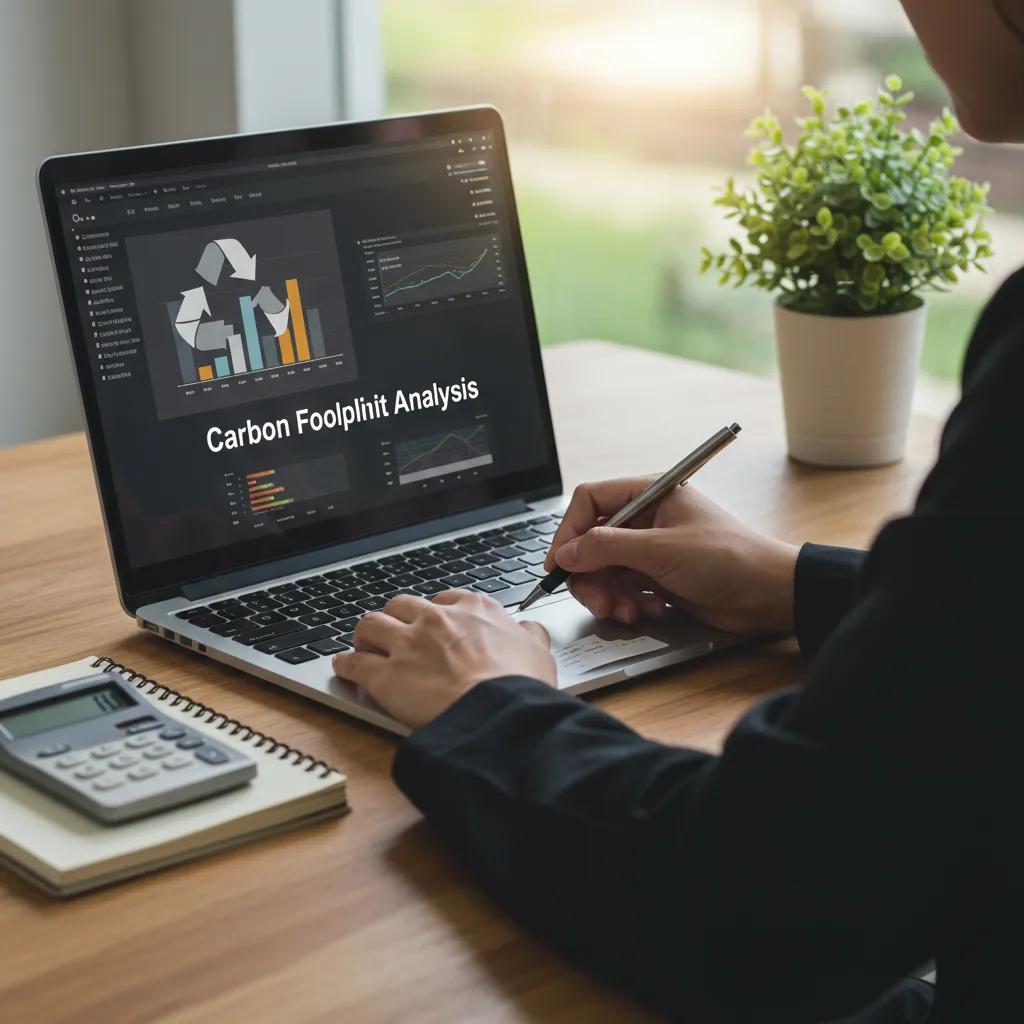
Carbon footprint analysis provides the data foundation for net zero planning through systematic data collection, emissions calculations, and structured reporting. Consultants set scope boundaries (organisational, operational, and supply chain), gather activity data, apply emission factors, and produce GHG inventory reports that distinguish Scope 1, Scope 2, and Scope 3 emissions. Typical results include a starting inventory, an assessment of uncertainties, an analysis of major emission sources, and suggestions for better data management to enhance future measurements. Clear documentation and reproducible methods enable comparability and support external verification when needed.
To show how each core component creates value, the table below compares typical service components and the benefits they deliver.
Intro: The table summarises the core Net Zero consulting components and the primary value they deliver to organisations pursuing credible emissions reductions.
| Service Component | Function | Value Delivered |
|---|---|---|
| GHG Inventory | Quantify Scope 1/2/3 emissions and highlight data gaps. | Baseline for target‑setting and hotspot prioritisation |
| Target Setting | Align objectives with science‑based frameworks or internal goals. | Credibility and clear direction for investment decisions |
| Roadmap Development | Sequence measures have timelines, budgets, and owners. | Practical implementation plan that aligns stakeholders |
| Implementation Support | Procurement, pilot oversight and project management. | Faster deployment and reduced execution risk |
| Monitoring & Verification (M&V) | KPI dashboards and assurance processes | Transparent performance and reporting credibility |
This comparison demonstrates how discrete services transform measurement into prioritised action and verified progress.
How Do Environmental Consultants Develop a Net Zero Emissions Roadmap?
A net zero-emissions roadmap lays out the path from baseline emissions to long-term targets by sequencing interventions, budgets, responsibilities, and M&V. Consultants build roadmaps through assessment, scenario analysis, prioritisation and governance design, balancing technical feasibility with commercial viability. Roadmaps typically include timelines, investment profiles and decision gates that align with corporate planning cycles, so mitigation actions integrate with CAPEX and procurement. Clear roadmaps let executives weigh trade-offs between deep decarbonisation options—for example, efficiency versus carbon removal—while paying attention to cost, lead time, and co-benefits.
Using a stepwise approach helps organisations move from assessment to execution with measurable milestones and governance that can adapt as conditions change.
- Assess baseline and data quality: Compile the GHG inventory, identify hotspots; and quantify uncertainty.
- Set targets and scenarios: Compare pathways aligned to science‑based or internal targets and model outcomes.
- Prioritise measures: Apply abatement cost curves, feasibility checks and co-benefit scoring to rank actions.
- Develop an implementation plan: sequence projects, assign owners and align budgets and procurements.
- Establish M&V and governance: Define KPIs, reporting cadence and oversight roles.
These steps create a clear execution path; next we break down the procedural tasks consultants undertake during roadmap development.
What Steps Are Involved in Creating a Decarbonisation Strategy Consulting Plan?

Consultants follow a disciplined sequence from data collection to implementation planning to ensure strategies are actionable and finance‑ready. The work starts with a comprehensive GHG inventory and scenario modelling for projecting emissions under different interventions. The consultants then assess technical feasibility, costs, and regulatory implications to produce prioritised business cases and pilot recommendations. Finally, they embed the plan in corporate systems—procurement specifications, project governance, and M&V arrangements— so implementation proceeds with measurable controls.
This procedural clarity helps stakeholders move from analysis to funded projects with defined milestones and verification requirements.
How Do Consultants Align Roadmaps with Corporate Sustainability Targets?
Consultants connect corporate sustainability goals with what businesses can actually do by linking emissions to different departments and turning broad goals into measurable KPIs. They use scenario analysis to test achievability within capital constraints and advise pursuing science-based targets versus interim internal pathways. Consultants also help embed decarbonisation KPIs into procurement, budgeting, and incentive structures to align behaviour and investment with net-zero objectives. That alignment turns abstract targets into operational tasks that can be monitored and adjusted over time.
Accurate alignment depends on robust measurement—covered in the next section on carbon footprint analysis.
Why Is Carbon Footprint Analysis Critical in Net Zero Strategies?
Carbon footprint analysis is the evidential base for net zero decisions: it quantifies emissions, uncovers hotspots, and enables the prioritisation of cost-effective measures. Without a credible footprint, organisations cannot set defensible targets, compare interventions or reliably claim progress. Analysts apply standard methods to keep disclosures transparent and support regulatory reporting; footprint analysis also informs procurement and investment sequencing that delivers measurable reductions. In short, footprint analysis turns ambition into actionable intelligence and enables comparison over time and against peers.
Because it’s central to decision‑making, the next subsections explain measurement practices and compare common tools and standards used in footprint work.
How Do Environmental Consultants Measure and Report Carbon Emissions?
Consultants measure emissions by collecting activity data—fuel use, electricity consumption, and transport metrics—and applying emission factors to calculate GHG outputs while ensuring quality through data validation and uncertainty assessment. Reporting follows established frameworks that organise disclosures by scope and include contextual metrics, such as emission intensity per unit of output. Consultants typically provide technical annexes describing data sources, methods, and assumptions to support transparency and third-party assurance. Reporting templates and dashboards translate technical inventories into executive KPIs for ongoing decision‑making.
Robust measurement and reporting form the foundation for selecting methods and tools, discussed next.
What Tools and Methodologies Are Used in Carbon Footprint Analysis Services?
Consultants use internationally recognised standards and software to ensure consistency and comparability; they choose approaches that suit a client’s sector, data maturity, and reporting needs. The GHG Protocol and ISO 14064 set accounting rules, lifecycle assessment (LCA) supports product‑level footprints, and carbon‑accounting platforms automate recurring calculations and dashboards. Each option trades off granularity, auditability and resource intensity, so consultants select tools according to the transparency requirements and the client’s data systems. The table below compares common methodologies and platforms by scope, use case and strengths/limitations.
Intro: This table helps readers compare typical footprint methodologies and software options used in Net Zero programs.
| Tool / Method | Scope / Use Case | Strengths / Limitations |
|---|---|---|
| GHG Protocol | Organisational and value-chain accounting | Widely adopted with strong comparability; thorough Scope 3 accounting requires extensive data. |
| ISO 14064 | Verification and assurance‑focused inventories | These inventories are suitable for certification and assurance, but they can be resource-intensive. |
| Lifecycle Assessment (LCA) | Product‑level footprinting | Provides cradle‑to‑grave detail; data‑ and time‑intensive |
| Carbon Accounting Platforms | Ongoing data aggregation and reporting | Automates reporting and dashboards; integration depends on client systems. |
This comparison highlights that methodology choice balances credibility, resource needs and the intended use of results.
What Role Do Environmental Consultants Play in Decarbonisation Strategy Consulting?
Environmental consultants fulfil several roles in decarbonisation strategy: technical diagnosis, commercial appraisal, procurement support and implementation oversight. They have the analytical capacity to identify cost-effective abatement opportunities, design interventions that fit business models, and structure contracts to secure the required goods and services. During implementation, consultants often manage pilots, coordinate vendors and oversee measurement systems to ensure projects deliver projections of emissions reductions. That cross-disciplinary perspective reduces execution risk and helps organisations realise both environmental and financial outcomes.
These roles depend on robust methods to identify opportunities and track progress, which the following subsections explore.
How Do Consultants Identify Emission Reduction Opportunities?
Consultants find opportunities through site audits, energy and process analyses, and value chain hotspot assessments that reveal concentrated emissions and high-impact interventions. Typical opportunities include energy efficiency upgrades, fuel switching to low-carbon sources, renewable energy procurement, and supply chain measures targeting Scope 3 hotspots. Consultants apply cost-effectiveness and feasibility filters and often model abatement curves to prioritise measures that deliver the greatest emissions reduction per dollar. This structured method puts resources into interventions that have a clear effect and a reasonable payback period.
After deployment, monitoring ensures adjustments and course corrections — the subject of the next section.
How Is Progress Monitored and Adjusted in Decarbonisation Plans?
Progress is tracked with KPI dashboards, periodic inventory updates and M&V protocols that verify emission reductions and project performance against forecasts. Consultants recommend reporting cadences—monthly operational metrics for projects and annual GHG inventories for corporate tracking—paired with governance checkpoints to review results and reprioritise actions. Adaptive management uses monitoring data to recalibrate timelines, reallocate funds to higher-performing measures, and incorporate new technologies or regulatory changes. Third‑party verification adds further assurance that reported reductions are real and persistent.
Monitoring frameworks also support regulatory compliance and facilitate broader sustainability integration, which will be discussed next.
How Do Environmental Consultants Ensure Compliance and Sustainability in Net Zero Initiatives?
Consultants support compliance and embed sustainability by mapping applicable regulations, setting reporting routines aligned with disclosure frameworks and integrating best practices in procurement and operations. They translate legal requirements into operational checklists, advise on carbon pricing and emissions trading implications, and design reporting packages that meet disclosure mandates. Beyond compliance, consultants promote sustainability measures—such as “circular economy” initiatives and supplier engagement— that reduce emissions while managing reputational and legal risk. This combined approach minimises compliance gaps and builds long-term resilience and stakeholder trust.
The following subsections outline regulatory drivers and practical steps to embed sustainability throughout the organisation.
What Environmental Regulations Impact Net Zero Strategy Development?
Key regulatory drivers include emissions reporting mandates, carbon pricing or emission trading schemes, and sector-specific compliance requirements that shape permissible pathways and timelines. Regional and national rules set reporting thresholds, required metrics and disclosure deadlines, while carbon pricing affects the economics of timing and technological choices. Consultants map these regulations to businesses’ operations to identify compliance risks, timing constraints, and opportunities for incentives or grants. Understanding the regulatory landscape ensures that roadmaps reflect legal constraints and capture policy-driven opportunities for decarbonisation.
Regulatory mapping leads to operational best practices for integrating sustainability across the organisation.
How Do Consultants Integrate Sustainability Best Practices into Net Zero Plans?
Consultants embed sustainability by engaging stakeholders, applying just‑transition principles and using lifecycle thinking to avoid outsourcing emissions. Practical steps include updating procurement standards to favour low-carbon suppliers, integrating circular economic approaches into product design, and specifying contract clauses for emissions performance. They also establish transparent disclosure practices to reduce greenwashing risk and communicate progress credibly to investors and customers. These best practices ensure net‑zero plans deliver equitable, durable outcomes alongside emissions reductions.
Integrating these practices increases the strategic value of consultant engagements and brings us to the benefits of hiring consultants.
What Are the Benefits of Hiring Environmental Consultants for Net Zero Emission Goals?

Hiring environmental consultants brings technical expertise, faster implementation, and stronger reporting credibility—three outcomes that significantly improve net zero success. Consultants provide specialised tools and methodologies that many internal teams lack, enabling evidence-based prioritisation and stronger business cases for investment. Their oversight reduces execution risk, improves procurement outcomes and boosts stakeholders confidence through rigorous documentation and verification. Below are the principal benefits summarised to aid decision‑making.
Information hubs and advisory services complement these benefits by curating up-to-date methodologies, benchmarking outcomes, and translating complex rules into actionable guidance; this authoritative analysis supports consultant work without replacing in-house capabilities.
- Specialist Expertise: Advanced carbon accounting and technology assessment skills that accelerate planning and improve accuracy.
- Faster Implementation: Advisory and delivery support that shortens project cycles and reduces execution risk.
- Credible Reporting: M&V processes and documentation that strengthen stakeholder trust and compliance.
These benefits translate into measurable outcomes; the table below links consultant services to common examples and results.
Introduction: The table links consultant-delivered benefits to delivery methods and measurable organisational outcomes.
| Benefit | How Delivered | Example / Outcome |
|---|---|---|
| Specialist Expertise | GHG inventory and targeted technical assessments | Accurate hotspot identification and targeted interventions |
| Accelerated Implementation | Project management and procurement support | Shorter time‑to‑deployment and fewer cost overruns |
| Reporting Credibility | M&V frameworks and documentation for assurance | Verified emissions reductions and stronger stakeholder confidence |
| Cost Optimisation | Abatement cost analysis and investment sequencing | Higher‑ROI projects are implemented first, lowering overall programme cost. |
How Do Consultants Improve Corporate Environmental Performance?
Consultants raise environmental performance by delivering targeted technical interventions, shifting procurement practices and building internal capacity for sustained improvements. They recommend operational optimizations—such as efficiency retrofits and process changes—that cut energy and material use, and they guide supplier engagement to tackle Scope-3 hotspots. Consultants also design training and governance systems so clients can maintain and scale gains, ensuring short‑term projects lead to lasting performance improvements and stronger environmental KPIs.
What Case Studies Demonstrate Successful Net Zero Consulting Outcomes?
Concise anonymised case summaries reveal a common pattern: a baseline inventory exposes hotspots, consultants prioritise high‑return measures, pilots validate assumptions and scaled implementation delivers verified reductions. For example, an industrial client cut energy‑related Scope‑1/2 emissions by combining efficiency upgrades with renewable electricity procurement under consultant guidance, achieving measurable reductions within two years. Another example involved supply‑chain engagement that lowered purchased‑goods emissions by focusing on key suppliers and updating procurement specifications. These cases underline the importance of inventory accuracy, prioritised interventions and robust M&V to translate plans into reported outcomes.
As organisations seek ongoing, practitioner‑focused analysis, information hubs consolidate best practices, methodological updates and comparative tool guidance to support informed procurement and strategy choices. For readers wanting regular, authoritative synthesis of net‑zero methods and consultant workflows, reputable hubs provide curated research and practical summaries that guide decision‑making.
This closing paragraph reiterates the article’s aim: to inform and equip decision‑makers with the frameworks, tools and practical steps needed to select and work with environmental consultants for credible net‑zero delivery.
Bespoke Carbon Accounting Models for Public Institutions Driving Net Zero Public institutions, with broad operational scope and standardised workflows, are well placed to lead on carbon action. Their energy use typically centres on electricity and natural gas, while predictable commuting patterns and procurement create a consistent consumption profile. Research into commuting emissions and procurement strategies for public institutions demonstrates how tailored approaches improve accounting accuracy. This paper analyses energy use, institutional structures and staff commuting and procurement behaviours to develop a bespoke carbon accounting model for public institutions, integrated into a broader platform. By providing methodological frameworks and technical foundations for carbon accounting in China’s public institutions, the work supports progress toward carbon peak and, ultimately, carbon neutrality. Development and implementation of carbon accounting models and standardisation platforms in public institutions, 2024
Frequently Asked Questions
What qualifications should I look for in an environmental consultant?
Look for relevant academic credentials in environmental science, engineering or sustainability, as well as practical certifications and domain experience. Credentials such as GHG Protocol expertise, ISO 14001 or recognised sector certifications indicate technical competence. Equally important are industry experience, a track record of net‑zero projects and strong stakeholder engagement skills — all of which matter for effective implementation and organisational alignment.
How can organisations measure the effectiveness of their net zero strategies?
Measure effectiveness with clear KPIs that track emissions reduction, energy use and cost savings. Establish routine M&V processes to compare progress against targets and revisit baseline inventories periodically. Combine quantitative metrics with stakeholder feedback to assess operational impact and cultural change. Regular reporting and independent verification help validate outcomes and guide ongoing adjustments.
What challenges do organisations face when implementing net zero strategies?
Common challenges include incomplete or inconsistent data, constrained budgets, organisational resistance and regulatory complexity. Aligning diverse stakeholder priorities and finding the right technologies can also slow progress. To overcome these issues, invest in data systems and training, engage stakeholders early and partner with experienced consultants to design pragmatic, finance‑ready plans.
How do environmental consultants stay updated on regulations and best practices?
Consultants keep current through continuous professional development, industry conferences and memberships in professional networks. They follow regulatory updates, subscribe to sector publications and use information hubs and standards bodies for methodological guidance. Ongoing knowledge sharing and peer networks ensure consultants bring up‑to‑date practices to client engagements.
What role does stakeholder engagement play in net zero consulting?
Stakeholder engagement is central: it secures buy‑in, surfaces practical constraints and builds the relationships needed to implement change. Facilitated workshops, clear roles and consistent communication help align expectations across functions and with external partners. Effective engagement turns strategy into shared ownership and accelerates delivery.
Can small businesses benefit from environmental consulting services?
Yes. Small businesses can gain cost‑effective emissions reductions, improved operational efficiency and help navigating compliance and reporting. Consultants can tailor scope and tools to fit limited resources, focusing on high‑impact, low‑cost measures and practical steps that deliver measurable benefits without overwhelming internal teams.
Conclusion
Working with environmental consultants helps organisations achieve net‑zero goals with greater speed, credibility and confidence. Consultants supply technical rigour, practical delivery support and robust reporting frameworks that make targets achievable and verifiable. If you’re ready to move from ambition to action, explore our consulting services and resources to design a credible, finance‑ready net‑zero pathway.