

I still remember the first time I truly felt climate change. It wasn’t from a graph or a news report. I was hiking in the Sierra Nevada mountains with my family, a place I’d visited every summer since I was a kid. The air was thick with smoke from a wildfire hundreds of miles away, turning the midday sun into a hazy, blood-red orb. An acrid burn replaced the familiar scent of pine. My daughter, then only seven, looked up at me, her eyes wide with a question I couldn’t easily answer: “Daddy, is the world on fire?” In that moment, the abstract threat of climate change became a visceral, personal reality. It’s a feeling millions around the globe are now sharing, from farmers in Kenya facing unprecedented droughts to families in Bangladesh watching their homes succumb to rising seas.
This shared experience is the driving force behind an unprecedented global scientific and political effort. Climate change is no longer a distant forecast; it’s our present. But in the face of this crisis, there’s also a powerful story of human ingenuity, collaboration, and a growing determination to act. This is the story of climate change research and the global action plans that are our best hope for a liveable future.
From Ice Cores to Supercomputers: The Unfolding Story of Climate Science
Our understanding of Earth’s climate didn’t appear overnight. It’s the result of over a century of meticulous, collaborative detective work. In the 1890s, Swedish scientist Svante Arrhenius was the first to theorise that burning fossil fuels could cause global warming by increasing atmospheric carbon dioxide. For decades, the theory was a fringe idea. But in the 1950s, Charles David Keeling began his famous measurements of CO₂ at Mauna Loa Observatory in Hawaii. His data, now known as the Keeling Curve, provided the first irrefutable, continuous evidence that human activity was steadily increasing the planet’s primary greenhouse gas.
Today, climate science is a vast, interdisciplinary field. Researchers are like planetary physicians, using a staggering array of tools to diagnose the Earth’s health. They drill deep into Antarctic ice sheets, extracting cores that contain bubbles of ancient air, allowing them to reconstruct atmospheric conditions over the past 800,000 years. This historical record, maintained by institutions like the National Oceanic and Atmospheric Administration (NOAA), shows that current CO₂ levels are higher than at any point in human history.
Meanwhile, a global fleet of satellites, ocean buoys, and weather stations constantly feed data into the world’s most powerful supercomputers. These machines run complex climate models that simulate the interactions between the atmosphere, oceans, land, and ice. The gold standard for synthesising this global research is the work of the Intergovernmental Panel on Climate Change (IPCC). Their comprehensive assessment reports, written by thousands of scientists from around the world, represent the most authoritative and consensus-based view of the climate crisis. Their latest report is a stark warning: we are on a path to exceed 1.5°C of warming within the next decade, a threshold beyond which many of the planet’s most dangerous and irreversible impacts will be locked in.
The Stark Reality: What the Science is Telling Us
The evidence is overwhelming and all around us. The science has moved beyond a simple “if” to a detailed “how, when, and where.” We are witnessing the fingerprints of a warming planet in real time.
- Rising Temperatures: The last decade has been the hottest on record. Heatwaves are becoming more frequent, intense, and longer-lasting, posing a direct threat to human health, especially in urban areas.
- Melting Ice and Rising Seas: Glaciers and ice sheets in Greenland and Antarctica are losing mass at an accelerating rate. This meltwater, combined with the thermal expansion of warming oceans, is causing sea levels to rise, threatening coastal cities and island nations. The NASA Sea Level Change portal provides stunning visualisations of this global phenomenon.
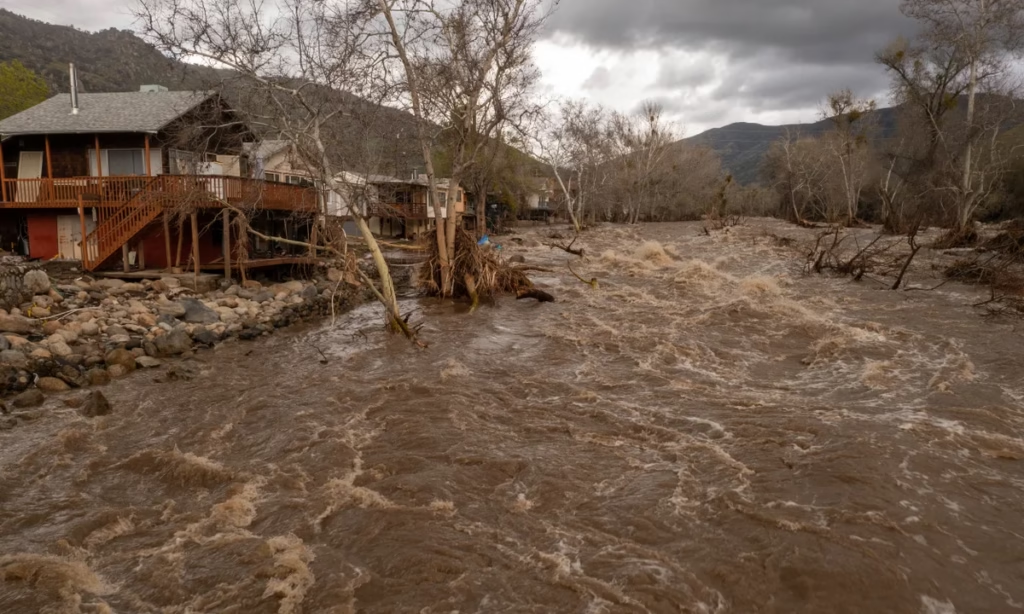
- Extreme Weather on Steroids: A warmer atmosphere holds more moisture, leading to more intense rainfall and flooding events. Conversely, in other regions, it exacerbates droughts and creates the perfect conditions for catastrophic wildfires, like the ones that have ravaged Australia, California, and Canada recently.
- Ocean Acidification: The oceans have absorbed about 30% of our CO₂ emissions, which is a good thing for the atmosphere but a disaster for marine life. This absorption makes seawater more acidic, threatening coral reefs—the “rainforests of the sea”—and the entire food web that depends on them.
This isn’t just an environmental issue; it’s a profound social and economic one. The World Health Organization (WHO) estimates that climate change will cause 250,000 additional deaths per year between 2030 and 2050 due to malnutrition, malaria, diarrhoea, and heat stress. The economic costs are staggering, with the World Bank warning that climate change could push over 130 million people into poverty by 2030.
From Kyoto to Paris: The Evolution of Global Climate Diplomacy
Recognising the global nature of the problem, the international community has been trying to form a collective response for decades. The journey has been bumpy, marked by both historic breakthroughs and frustrating setbacks.
It began in earnest with the 1992 United Nations Framework Convention on Climate Change (UNFCCC), which established the principle of “common but differentiated responsibilities”. This acknowledged that while all nations are responsible for addressing climate change, developed countries, having contributed the most to historical emissions, should take the lead.
The first major attempt to put this idea into practice was the Kyoto Protocol in 1997. It set legally binding emissions reduction targets for developed nations. While a landmark agreement, its impact was limited by the lack of participation from major emitters like the United States and the absence of binding targets for developing economies.
In 2015, the Paris Agreement truly revolutionised the global climate. For the first time, nearly every nation on Earth—196 in total—agreed to a common cause: to hold global warming “well below” 2°C above pre-industrial levels and to pursue efforts to limit it to 1.5°C. The genius of the Paris Agreement was its “bottom-up” structure. Instead of imposing top-down targets, it asked each country to submit its plan, known as a Nationally Determined Contribution (NDC), outlining how it would reduce its emissions and adapt to climate impacts. These NDCs are meant to be updated and strengthened every five years, creating a “ratchet mechanism” to drive ever more ambitious action.
The Paris Agreement was a moment of immense hope. But as the saying goes, the devil is in the details— implementation and finance.
The Grand Plan vs. The Hard Reality: Are We on Track?
Here’s the uncomfortable truth: despite the promise of the Paris Agreement, the world is not on track to meet its goals. The latest assessments from the United Nations Environment Programme (UNEP) show a massive “emissions gap” between what countries have pledged to do and what is actually needed to stay within the 1.5°C limit.
This gap exists for several reasons. First, many NDCs are simply not ambitious enough. Second, even when ambitious pledges are made, concrete policies and legislation often do not support them to ensure they are met. Third, and perhaps most critically, there is a chronic shortfall in climate finance. Developing nations, which have contributed the least to the problem, are on the front lines of its impacts and need significant financial and technological support to both mitigate their emissions and adapt to a changing climate. The promise made by developed nations in 2009 to mobilise $100 billion per year in climate finance by 2020 was only met for the first time in 2022, and the need is now far greater.
A Global Snapshot: Comparing Key Climate Action Plans
To understand the landscape, it’s helpful to compare the approaches of some of the world’s largest economies and most vulnerable nations.
| Region/Country | Key Climate Goal | Primary Strategies | Major Challenges |
|---|---|---|---|
| European Union | Net-zero by 2050; -55% emissions by 2030 (vs. 1990) | The European Green Deal includes carbon pricing through the EU ETS, a massive rollout of renewable energy, and the phasing out of internal combustion engines. | Member states are facing political pushback, ensuring a just transition for regions dependent on fossil fuels, and addressing concerns about energy security. |
| United States | Net-zero by 2050; -50-52% by 2030 (vs. 2005) | Inflation Reduction Act (historic clean energy investment), regulations on power plants and vehicles, and methane reduction. | Political polarisation, legal challenges to regulations, scaling up supply chains for clean tech. |
| China | Peak emissions before 2030; carbon neutrality by 2060 | The world’s largest renewable energy deployment (solar, wind), a massive EV market, and high coal dependency. | Balancing economic growth with emissions cuts, transparency in reporting, and managing a just transition for its vast coal workforce. |
| India | Net-zero by 2070; 50% of electricity from renewables by 2030 | There is a massive expansion of solar power, a mission to promote green hydrogen, and a focus on energy efficiency. | There is a significant increase in energy demand, a need for international finance and technology transfer, and a vulnerability to the impacts of climate change. |
| Small Island Developing States (SIDS) | Survival and adaptation | The strategy includes advocating for the global 1.5°C target, constructing sea walls, implementing climate-resilient agriculture, and pursuing loss and damage finance. | Sea-level rise poses an existential threat due to its extreme dependence on international support and the limited resources available for large-scale adaptation. |
This table reveals a complex picture. While there is a clear global direction toward net zero, the timelines, strategies, and capacities vary enormously. The success of the entire global effort hinges on the ability of major emitters to accelerate their transitions and for the international community to deliver on its promises of support to the most vulnerable.
Beyond Governments: The Rising Tide of Non-State Action
International negotiations are crucial, but the fight against climate change has transcended beyond the confines of government. A robust network of non-state entities is spearheading transformation from the grassroots level.
Cities are at the forefront. Networks like C40 Cities bring together mayors from megacities around the world who are implementing bold policies—expanding public transit, building bike lanes, mandating green buildings, and creating low-emission zones—that often outpace their national governments.
Businesses are also waking up to the risks and opportunities. A growing number of corporations are setting science-based targets through the Science Based Targets initiative (SBTi), committing to reduce their emissions in line with what the latest climate science says is necessary. Investors are increasingly demanding climate risk disclosures, pushing companies to be more transparent and sustainable.
And then there’s civil society. From the global youth climate strikes inspired by Greta Thunberg to local community groups planting trees and restoring wetlands, citizens are demanding action and building resilience in their backyards. Holding leaders accountable and demonstrating that a different, cleaner future is not only possible but already under construction is crucial.
Your Role in the Grand Plan: Actionable Steps for Every Reader
It’s easy to feel overwhelmed by the scale of the climate crisis. But your individual actions, multiplied by millions, create a powerful collective force. Here’s how you can be part of the solution:
- Rethink Your Energy: Your lifestyle is the single biggest lever. If you can, switch to a renewable energy provider for your home. Invest in energy efficiency—LED bulbs, smart thermostats, and proper insulation can drastically cut your bills and emissions. The U.S. Department of Energy’s Energy Saver guide is a fantastic resource for practical tips.
- Reimagine Your Transportation: Can you walk, bike, or take public transit for your next trip? If you’re in the market for a new car, consider an electric or hybrid vehicle. Even reducing the number of flights you take can have a significant impact.
- Shift Your Diet: You don’t have to go fully vegan, but reducing your meat consumption, especially beef and lamb, can lower your carbon footprint. Support local and sustainable agriculture when you can.
- Use Your Voice and Your Wallet: Talk to your friends and family about climate change. Contact your elected officials and demand stronger climate policies. Support businesses that are serious about sustainability and hold those that aren’t accountable.
- Get Involved Locally: Join a community garden, a local environmental group, or a campaign for a new bike path or park. Local action builds community resilience and creates a culture of sustainability.
Remember, perfection is the enemy of progress. Start with one change that feels manageable and build from there. The goal is not to be a perfect climate citizen but to be an engaged and active participant in the solution.
Frequently Asked Questions About Climate Change Research and Action
Q: Is climate change really caused by humans?
Yes, the scientific consensus is overwhelming. The IPCC states it is “unequivocal” that human influence has warmed the atmosphere, ocean, and land. The primary driver is the burning of fossil fuels (coal, oil, and gas), which releases greenhouse gases like carbon dioxide and methane.
Q: What’s the difference between climate change and global warming?
‘Global warming’ refers specifically to the long-term rise in Earth’s average surface temperature. ‘Climate change’ is a broader term that encompasses global warming and all its side effects, including changes in precipitation patterns, more extreme weather, sea-level rise, and ocean acidification.
Q: Are the Paris Agreement goals still achievable?
It’s becoming increasingly difficult, but not yet impossible. Achieving the 1.5°C goal requires global emissions to peak before 2025 and be cut by 43% by 2030. This result demands an unprecedented, immediate, and rapid transformation of our energy, transport, and food systems. Every fraction of a degree of warming that we can prevent is significant.
Q: What is “net-zero”, and why is it important?
Net-zero means that any greenhouse gases released into the atmosphere are balanced by an equivalent amount being removed. It’s the point at which we stop adding to the problem. Reaching global net-zero CO₂ emissions is essential to stabilize the climate and stop global warming.
Q: What can I do if I feel anxious or overwhelmed about climate change?
Climate anxiety is a normal and rational response. It’s important to acknowledge those feelings. Focus on what you can control—your actions and your community. Connect with others who share your concerns. Taking action, even small steps, is the best antidote to despair. Resources from organisations like the American Psychological Association can also be helpful.