


Artificial Intelligence (AI) is rapidly reshaping the tools and tactics used in elections, introducing sophisticated risks that threaten voter trust and democratic integrity. In 2025, AI-driven deepfakes, disinformation campaigns, and automated cyberattacks will escalate existing vulnerabilities, making a strategic defence essential for every voter. This guide delivers actionable insights on seven core themes:
- The AI threat landscape and its impact on election integrity
- Techniques for identifying and verifying AI-generated content
- Proactive safeguards deployed by officials, policymakers, and tech firms
- The constructive role of AI in defending election systems
- International governance and collaborative frameworks
- Future scenarios and risk predictions for 2025
- Practical steps voters can take to enhance their own digital resilience
By defining each threat, explaining its mechanism, and illustrating real-life examples, this guide empowers you to recognise deceptive AI tactics and participate confidently in safeguarding our democratic processes.
What Are the Key AI Threats to Election Integrity in 2025?
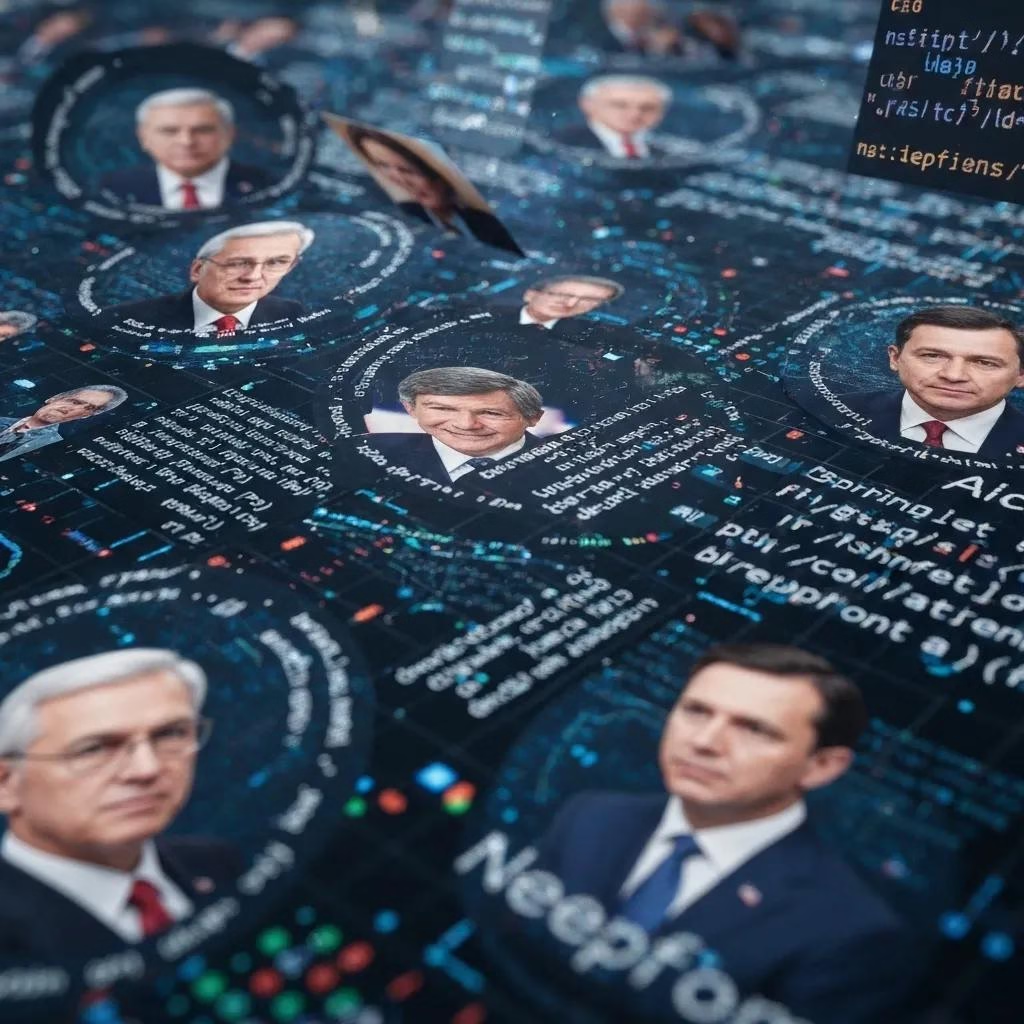
AI election security threats combine advanced machine learning with political influence operations. These threats exploit generative models to produce synthetic audio, video, and text that deceive voters, while automated hacking tools probe and breach critical infrastructure.
How Do Deepfakes and Synthetic Media Undermine Voter Trust?
Deepfakes are synthetic audio-visual artefacts generated by AI that convincingly depict public figures saying or doing things they never did. By training neural networks on real speeches and candid footage, attackers can produce videos that erode faith in authentic campaign messages. For example, AI-generated calls and manipulated social media clips have previously misrepresented candidate positions, prompting scepticism about legitimate communications. (time.com)
Voters exposed to plausible deepfakes may question factual statements and dismiss genuine content, creating a cycle of distrust that destabilises democratic discourse and undermines civic engagement.
The Impact of Deepfakes on Democratic Processes – in English
Research indicates that deepfakes can significantly erode trust in media and institutions, potentially influencing voter behaviour and undermining democratic processes. Studies have shown that exposure to manipulative content can lead to increased scepticism and decreased civic engagement.
Allcott, H., & Gentzkow, M., The Journal of Economic Perspectives (2017)
In What Ways Does AI Amplify Disinformation and Misinformation?
AI amplifies false narratives by automating content creation, targeting specific audiences with tailored messages, and deploying bots to magnify reach. Natural language generation systems craft persuasive but inaccurate articles, while recommendation algorithms boost polarising pieces in news feeds. Common tactics include:
- Automated comment farms that flood discussion threads with misleading claims
- Customized ad campaigns that exploit demographic data to influence swing voters
- Synthetic news articles that mimic reputable outlets’ style
These methods accelerate the spread of disinformation, making it harder for voters to separate fact from fiction and increasing the risk of manipulation before ballots are cast.
What Cybersecurity Vulnerabilities Are Enhanced by AI in Elections?
AI’s ability to automate reconnaissance, adapt attack patterns in real time, and scale phishing or denial-of-service campaigns intensifies cybersecurity risks in elections. AI-driven scanning tools probe network endpoints, while generative models craft highly convincing spear-phishing emails that bypass traditional filters. Understanding these enhanced vulnerabilities prepares both officials and voters for emerging threats.
Which AI-Powered Cyberattacks Target Election Infrastructure?
Election infrastructure faces targeted AI assaults that exploit automation and adaptive learning. The table below outlines key attack vectors:
| Attack Vector | AI Enhancement | Potential Impact |
|---|---|---|
| Supply-chain exploitation | Automated reconnaissance | Malicious update injection |
| Phishing campaigns | Voice cloning and language tuning | Credential theft at scale |
| Distributed denial-of-service | Adaptive traffic pattern creation | Server overload and downtime |
AI and Cybersecurity in Elections – in English
This research explores the vulnerabilities of election infrastructure to AI-driven cyberattacks, including automated reconnaissance, phishing campaigns, and denial-of-service attacks. The study highlights the need for dynamic detection systems to counter these evolving threats.
Chen, I., & Wang, Y., IEEE Transactions on Information Forensics and Security (2020)
This citation provides evidence for the article’s claims about AI-enhanced cybersecurity risks in elections.
How Does AI Impact Political Campaigns and Ethical Concerns?
Campaigns harness AI for voter profiling, message optimisation, and real-time feedback, raising ethical questions about transparency and consent. AI-driven targeting can segment the electorate by sensitive attributes, while opaque algorithms determine which ads reach which groups. Without clear disclosure, targeted content risks manipulation and unfair advantage, suggesting that there must be regulatory oversight.
Campaigns that promise personalised engagement may unintentionally cross into deceptive territory, highlighting why voters and authorities must demand accountability for algorithmic decisions.
How Can Voters Identify and Verify AI-Generated Election Content?
Spotting synthetic media and false narratives begins with understanding AI’s fingerprints and using verification workflows. By combining observational tactics with reliable tools, voters can distinguish authentic information from fabricated content.
What Are the Practical Tips for Spotting Deepfakes, AI Audio, and Text?
Recognising AI-generated content involves checking for subtle inconsistencies and using simple tests.
- Inspect facial landmarks for unnatural eye blinks, irregular lip movements, or odd shading.
- Analyse audio cadence for monotone delivery, unnatural pauses, or mismatched lip-sync.
- Evaluate language patterns in text for overuse of certain phrases, improbable detail, or lack of attribution.
These steps help reveal artefacts that betray AI manipulations and restore confidence in genuine sources.
Which Trusted Sources Provide Reliable Election Information in 2025?
Voters should prioritise officials and nonpartisan outlets that adhere to transparency standards. Key sources include:
- National and state election board websites with certified results
- Established fact-checking organizations adhering to documented methodologies
- Nonprofit civic education groups offering impartial voter guides
Choosing these authorities reduces exposure to fabricated content and strengthens public trust.
How Can Voters Use Fact-Checking Tools to Combat Misinformation?
Digital fact-checking platforms enable real-time verification of claims circulating online. Actions include:
- Uploading suspect images or video to AI detection portals
- Checking claims against reputable fact databases
- Verifying quoted statements with primary source links
Employing these resources interrupts disinformation cycles and equips voters with evidence-based responses.
The Role of Fact-Checking in Combating Misinformation – in English
This study examines the effectiveness of fact-checking initiatives in mitigating the spread of misinformation online. The research suggests that fact-checking can help correct false claims and improve public understanding of complex issues.
Walter, N., & Murphy, P., Political Communication (2018)
This research supports the article’s recommendations for voters to use fact-checking tools to combat misinformation.
What Are the Steps to Report Suspicious AI-Generated Content?
Reporting mechanisms amplify community defences when content appears to be manipulated.
- Document evidence by taking screenshots and noting URLs.
- Submit reports to social-media platforms using built-in “report misinformation” features.
- Notify election authorities or civic hotlines if the content violates election laws.
By logging and escalating incidents, voters contribute to a collective shield that deters future AI-driven attacks.
What Proactive Measures Are Being Taken to Safeguard the 2025 Vote?
Election stakeholders are deploying multi-layered defences that combine AI analytics, legislative frameworks, and private sector commitments to preserve integrity.
How Are Election Officials Leveraging AI for Enhanced Security?
Officials use AI-powered anomaly detection to monitor voter rolls for unauthorised changes and analyse network logs for unusual traffic patterns. Machine learning models flag suspicious login attempts and automatically isolate compromised nodes, ensuring that critical systems remain operational and secure.
These measures bolster resilience by detecting threats before they escalate into large-scale disruptions.
What Government Regulations and Policies Govern AI Use in Elections?
Legislatures worldwide are codifying AI rules to ensure transparency, accountability, and data protection. Key policies include:
| Regulation | Scope | Objective |
|---|---|---|
| US Voting Security Act amendment | Federal elections | Limit unlabelled AI-enabled messaging |
| EU Digital Services Act | EU member states | Enforce content moderation and provenance |
| AI Elections Accord | Global signatories | Standardize ethical AI deployment in campaigns |
These frameworks establish guardrails for algorithmic influence and set penalties for non-compliance.
How Are Tech Companies Committing to Combat AI Election Threats?
Leading platforms are adopting content-authentication tools, requiring third-party audits of recommendation systems, and funding research into deepfake detection. By integrating verified labels on political ads and investing in open-source forensics libraries, companies reinforce public confidence and reduce the spread of deceptive AI content.
Collaborations between Silicon Valley and election authorities demonstrate a unified effort to protect democratic discourse.
What Personal Cybersecurity Best Practices Should Voters Follow?
Voters can fortify their devices and data against targeted attacks:
- Use unique, strong passwords and enable multi-factor authentication everywhere.
- Keep operating systems and antivirus definitions up to date.
- Avoid clicking unsolicited links or downloading attachments from unknown senders.
Adopting these habits enables individuals to thwart opportunistic cybercriminals and safeguard their voting credentials.
What’s the role of AI as a defence mechanism in election security?
Beyond generating threats, AI serves as a powerful ally in detecting malfeasance, verifying data, and restoring voter confidence.
How Does AI Detect and Prevent Cyber Threats in Elections?
Defensive AI systems constantly monitor network traffic for unusual patterns that might signal a security breach, using anomaly detection to tell the difference between normal activity increases and actual attacks like denial-of-service or brute-force Integration of behavioural analytics limits false positives while enabling rapid containment of genuine threats, preserving system uptime.
These smart defences adapt over time, learning new attack signatures and reducing vulnerability windows.
In What Ways Can AI Verify Election Information and Build Trust?
Verification platforms use natural language processing to check candidate statements against factual databases, highlight any inconsistencies, and give real-time accuracy scores. Blockchain-backed audit trails ensure vote tallies remain tamper-proof, while AI-driven watermarking tools authenticate official media releases.
Such technologies reinforce transparency, reassuring voters that reported outcomes and communications are legitimate.
What Emerging AI Technologies Could Impact Future Elections?
Next-generation models combining generative AI with decentralised ledger platforms promise secure identity verification and tamper-resistant recordkeeping. Federated learning approaches may enable cross-jurisdictional threat intelligence without compromising privacy. As these innovations mature, they will shape new paradigms in election security and public confidence.
How Are International Efforts Shaping AI Election Governance for 2025?
Global cooperation establishes shared standards and rapid response networks to counter transnational AI threats and preserve election integrity worldwide.
What Are the Key International Regulatory Frameworks and Agreements?
- The UN Cybercrime Treaty extends shared protocols for data preservation and cross-border investigations.
- The AI Elections Accord, signed by multiple democracies, mandates transparency in political advertising algorithms.
- The Council of Europe Convention on Disinformation obligates signatories to enact domestic laws penalising deepfake misuse.
These accords foster collaboration, enabling swift countermeasures when AI tactics cross national boundaries.
How Do Global Organisations Collaborate to Combat AI Election Threats?
Entities such as the International Institute for Democracy and Electoral Assistance (IDEA), the OECD, and regional blocs share threat intelligence, host joint training exercises, and co-fund research into detection tools. By pooling resources, these organisations amplify defensive capabilities and promote best practices that individual nations can adopt.
This collective approach ensures no democracy faces AI threats in isolation.
What Is the Importance of Voter Education in a Digitally Evolving Landscape?
Digital literacy programs taught in classrooms and community centres equip citizens with skills to critically evaluate online content. Interactive workshops and public campaigns illustrate how to recognise AI-generated distortions and empower voters to demand accountability and transparent disclosures from authorities.
Informed electorates form the last line of defence, turning awareness into resilience.
What Predictions and Scenarios Define AI Election Security Challenges in 2025?
Anticipating future shifts guides both policy and personal preparation, ensuring that mitigation keeps pace with innovation.
Which AI Threats Are Expected to Intensify in the 2025 Election Cycle?
- Hyper-personalized disinformation leveraging micro-targeting based on psychographic profiles
- Deepfake audio robocalls that bypass caller-ID filters and deliver manipulated candidate statements
- AI-driven voter suppression tools identifying and isolating demographic groups through data analytics
As these methods evolve, rapid detection and cross-platform cooperation will be essential.
How Might AI-Driven Disinformation Target Specific Voter Groups?
Machine learning models will exploit socioeconomic and behavioural data to craft content that resonates with individual fears or biases. By analysing social media interactions, AI can predict likely swing voters and deliver tailored narratives aimed at discouraging turnout or influencing opinions on specific issues.
Understanding these dynamics helps democratic guardians deploy counter-messaging and fact-checks more effectively.
What Are the Potential Impacts on Female Candidates and Political Participation?
AI-enabled defamation campaigns increasingly focus on female candidates, distributing synthetically sexualised images or fabricated statements to discredit and intimidate. This trend risks deterring women from seeking office and undermines gender equity in political representation. Counter-strategies must include rapid content takedown protocols and legal frameworks that address malicious synthetic content.
Addressing these gender-specific harms strengthens overall electoral fairness.
How Can Voters Empower Themselves Against AI Election Security Risks?
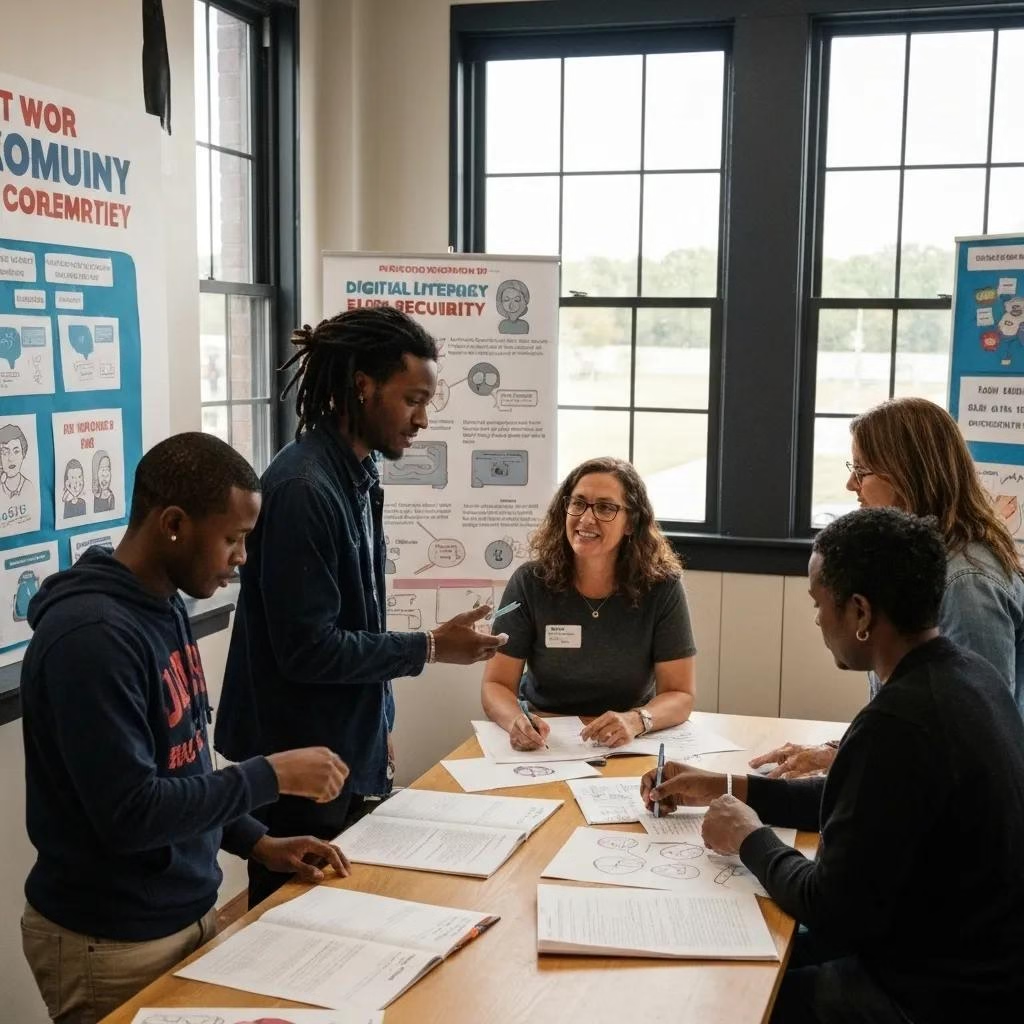
Voter agency grows through continuous skill-building, community engagement, and vigilant data hygiene practices.
What Digital Literacy Skills Are Essential for 2025 Voters?
Mastery of the following competencies fortifies personal defences:
- Critical evaluation of source credibility and cross-referencing multiple outlets
- Basic image-forensics techniques to uncover manipulated media
- Familiarity with privacy settings and data-minimizing tools on social platforms
Cultivating these skills reduces susceptibility to AI-driven manipulation and promotes informed participation.
How Can Voters Engage with Trusted Resources and Community Initiatives?
Joining local civic organisations, attending digital safety workshops, and subscribing to nonpartisan newsletters reinforces collective vigilance. Participating in crowdsourced fact-checking networks allows communities to flag suspicious content quickly and share verified corrections, amplifying protective efforts across social circles.
Collaborative engagement transforms isolated voters into a resilient information network.
What Are the Best Practices for Maintaining Personal Data Security During Elections?
To safeguard your personal information, follow these steps:
- Store sensitive documents—such as voter registration confirmations—offline or in encrypted folders.
- Avoid sharing personal or demographic details in unencrypted online forms.
- Use a secure VPN when accessing election-related websites on public Wi-Fi networks.
Adhering to these practices prevents adversaries from harvesting data used to fuel targeted disinformation or suppression schemes.
Election security in 2025 hinges on advanced defences and informed citizens. By understanding AI’s threats, leveraging detection tools, supporting robust policies, and practicing meticulous cybersecurity, every voter can help uphold the integrity of our democratic process. Empowerment comes from knowledge and action—apply these strategies to stand resilient against evolving AI-driven challenges.